
 By
Choose a pet water fountain by its usable water range, drinking surface and cleaning burden-not by litres alone. A 3L pet fountain may fit a smaller cat station well, while a dog or busy shared station may need 6L or 8L. None of those sizes tells you how long water can safely be left without attention.
Quick answer: Choose capacity together with drinking access and full-tank handling. W03 is a 3L cordless ceramic example, W600 Pro is a 6L rechargeable option and A08 is an 8L plug-in station. A larger number does not establish unattended days or solve sharing conflicts.
On this page
- The three size checks
- Compare 3L, 6L and 8L
- Sizing process
- Avoid sizing mistakes
- Common questions
A good size gives you refill room between normal care checks, lets the pet drink comfortably and remains manageable at the sink. Measure all three before choosing the biggest tank that will fit on the floor.
There are three sizes to check
| Size | What it changes | How to check it |
|---|---|---|
| Reservoir capacity | How much water can be stored within its marks. | Read capacity and minimum/maximum levels in the manual. |
| Drinking area | Muzzle room, approach and shared access. | Compare the actual tray shape and watch the pet drink. |
| Overall footprint | Floor space, turning room and tank removal. | Measure the intended station and the route to the sink. |
A wide shallow tray and a small outlet on a tall case may hold the same reservoir volume while feeling very different to a pet. Product photos alone do not establish comfortable drinking posture.
Estimate demand from your own station
Start with ordinary observation over several days while maintaining fresh water. Note which pets use the station, how quickly the level falls, whether there are spills and how much refill margin remains before the minimum mark. Do not infer precise drinking volume from a shared tank.
Food moisture also matters. Cornell’s feline hydration guidance explains that food contributes water, so a wet-food cat may drink less from a station than a dry-food cat. For a medical water-intake target, use your veterinarian’s advice rather than a shopping capacity table.
A refill example without false precision
Suppose a station is regularly close to its minimum by your evening check. A larger reservoir may give more margin, but first look for leaks, playing and splashing. If two pets are waiting to use it, another station may solve the actual problem better than a single larger tank.
Conversely, if most water remains but the tank is awkward to empty, extra capacity may be working against your care routine. A smaller station with dependable refilling can be a better fit. These are household decisions, not universal litres-per-pet rules.
Three WOPET capacities to compare
| Model | Capacity | Power | Worth considering when… |
|---|---|---|---|
| WOPET W03 | 3L | Rechargeable / cordless | You want ceramic with flexible placement. |
| WOPET W600 Pro | 6L | Rechargeable / cordless | A larger shared station needs cordless placement. |
| WOPET A08 | 8L | Plug-in | Dogs or multiple cats need a broad 8L station. |
W03: 3L for a smaller drinking station
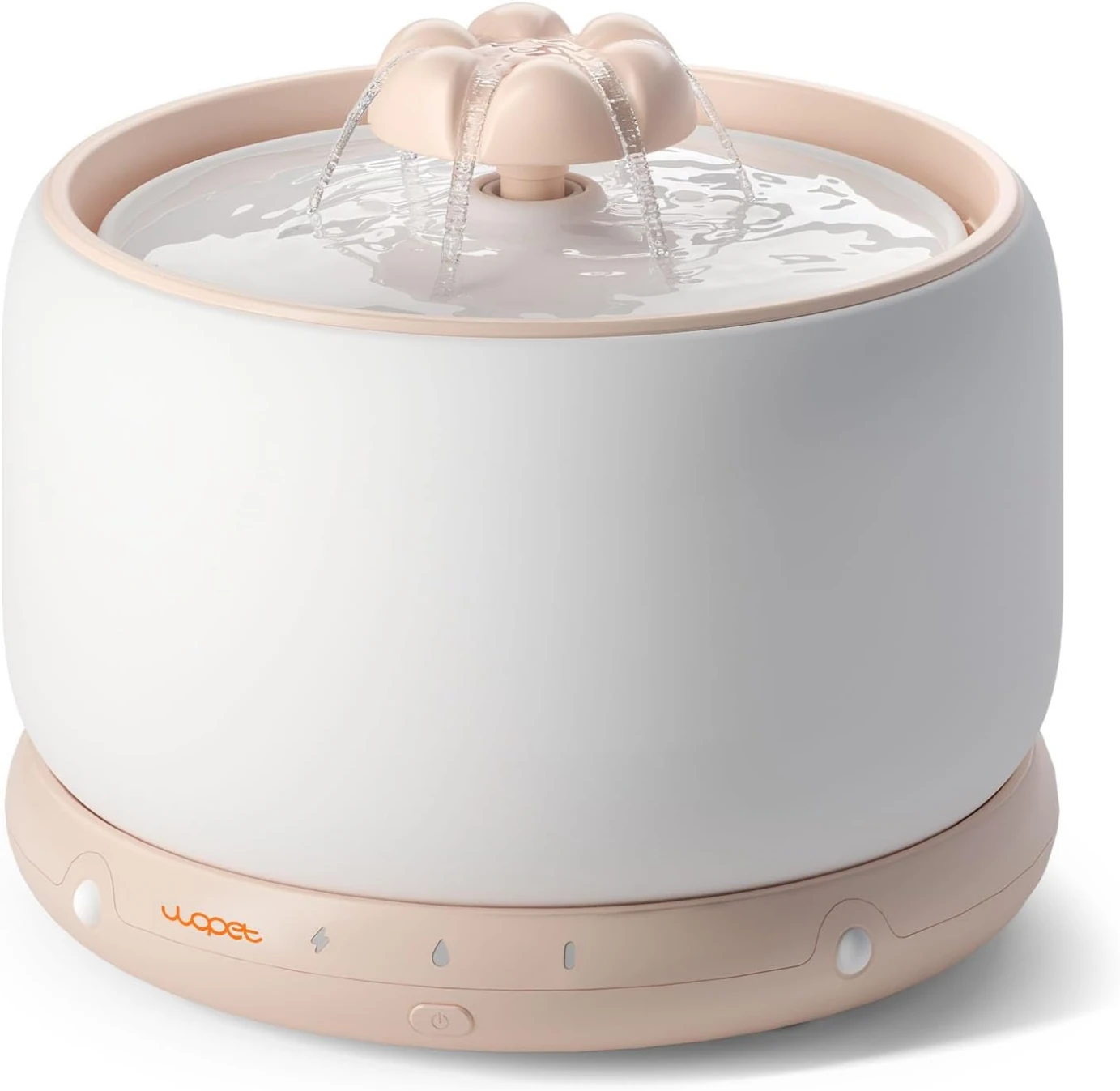
WOPET W03 · 3L · Rechargeable / cordless
The W03 3L ceramic wireless pet fountain is a cordless ceramic model. Compare it for a cat or small dog when the bowl fits and a flexible location is useful. Leave space to lift the ceramic body, and check charge separately from water level.
W600 Pro: 6L for a larger cordless setup
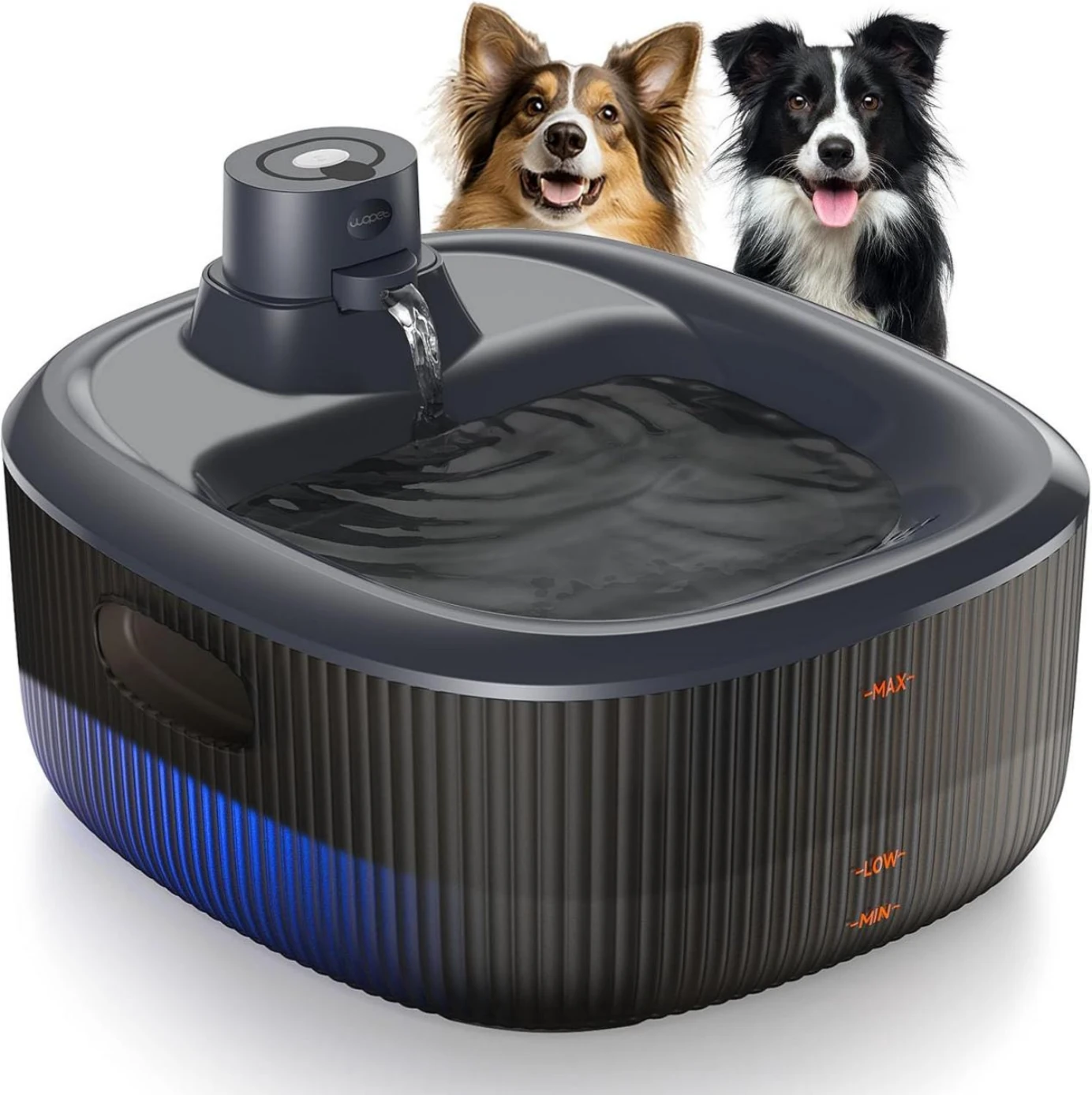
WOPET W600 Pro · 6L · Rechargeable / cordless
The W600 6L wireless pet fountain Pro brings a 6L reservoir to dogs and multi-cat use without requiring a permanent wall connection during battery operation. It is a practical comparison when a smaller station needs too-frequent refilling and you can manage the larger footprint.
A08: 8L for dogs and multi-cat homes
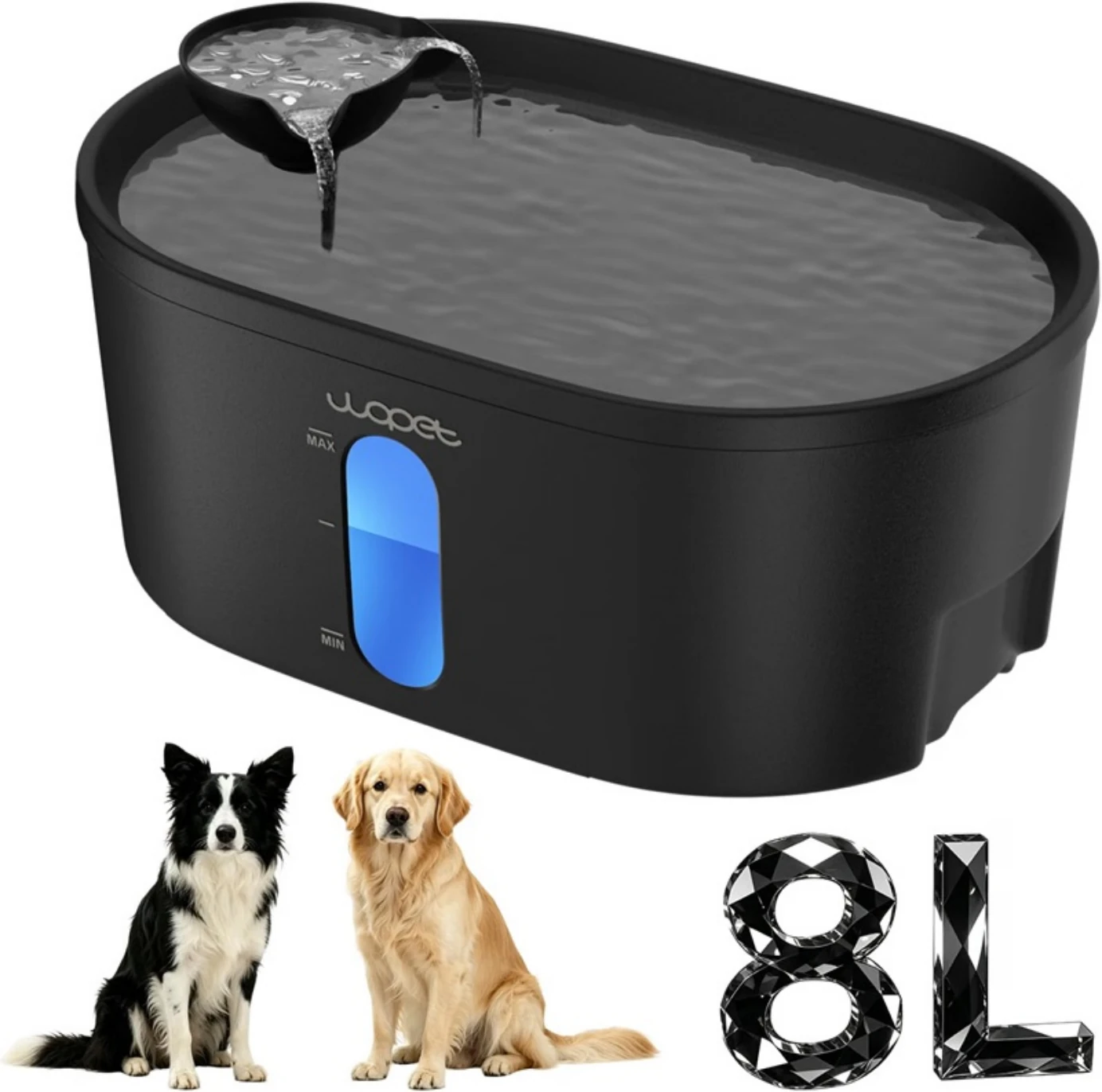
WOPET A08 · 8L · Plug-in
The A08 pet water fountain is a plug-in 8L fountain with a broad drinking area. It is the largest of these examples. Compare it for heavier shared use, with particular attention to lifting, emptying and cleaning a large tank rather than relying only on the stored volume.
Capacity cannot fix a guarded station
Watch the least confident pet. If a cat avoids the water while a dog is nearby, or one cat waits in a doorway until another leaves, add an accessible water point in a separate location. A larger reservoir at the same guarded spot leaves the access problem intact.
Keep another source of fresh water available while cleaning, charging or troubleshooting. This also gives pets a choice if the outlet or flow mode does not suit them.
Check the full-tank job
Each litre of water adds roughly a kilogram before counting the fountain body. Try the lifting route in your mind: does the tank clear the tap, can you drain it without tilting electrical parts toward the sink, and is there a stable place to set down the tray?
If those steps are difficult, choose a manageable size or a different layout. Handles and removable tanks are worth inspecting, but they do not cancel the water’s weight.
A sensible size decision
· Comfortable pet access comes first.
· Choose enough usable refill margin for your observed routine.
· Add separate stations when sharing is the problem.
· Reject a tank you cannot reliably empty and wash.
· Inspect daily regardless of nominal capacity.
General pet-dish hygiene guidance still applies to large reservoirs. Extra water storage does not justify leaving dirty water or surfaces in use longer.
A five-step sizing process
1. Measure the complete drinking area
Mark the fountain footprint on the floor with enough extra room for the pet to approach and turn. Do not count only the width of the case. A dog standing at the tray or a cat passing behind another user can need more space than the product dimensions suggest.
2. Compare the tray and posture
Check the outlet position, accessible water surface and drinking height. The relevant question is whether the pet can take an ordinary drink comfortably. A reservoir sized for several litres may still have an outlet that does not suit a particular muzzle or approach.
3. Observe the refill margin
Use several normal care periods to learn how quickly the level falls while maintaining fresh water. Record spills and other users. If the level approaches the minimum too soon, increase refill attention or consider another station instead of deliberately letting the pump reach its limit.
4. Measure the washing route
Check the sink opening, tap clearance and stable counter space for loose parts. Think through emptying the tank before lifting it. If another caregiver will use the station, consider their handling ability as well as yours. A useful capacity must be manageable on cleaning day.
5. Fit the power routine to that size
A larger rechargeable tank still needs charging; a smaller plug-in model still needs safe cable routing. Decide whether the intended location works with the power system. Do not move water to a poor location merely because a convenient outlet is already there.
Three household examples
For one cat in a small room, W03 is the smaller-capacity example here. Its ceramic body and cordless base may fit the location, provided the cat accepts the tray. Choosing it does not mean every single cat needs exactly 3L; it is a model to compare against the available space and care routine.
For a dog or several cats whose smaller station needs attention too quickly, W600 Pro offers a 6L rechargeable comparison. Check whether the problem is genuinely stored water or whether pets are spilling, competing or avoiding the original bowl. Extra capacity addresses only some of those situations.
For heavier shared use at a fixed location, compare the 8L A08 with the handling job it introduces. If the sink route is awkward, two manageable sources may be better than one difficult tank. Keep access and maintenance in the decision even when the larger reservoir seems appealing.
Sizing mistakes that lead to the wrong purchase
| Mistake | Better approach |
|---|---|
| Choosing the largest advertised tank | Balance refill margin with access and washing effort. |
| Using litres as a promise of unattended days | Check water and the pet every day. |
| Ignoring the minimum operating mark | Compare the usable range in the exact instructions. |
| Assuming a shared level measures each pet | Watch individual access and account for spills. |
| Treating refill frequency as a health diagnosis | Discuss unexpected changes with a veterinarian. |
Remember that a stated capacity refers to the designed fill level, not permission to add extra water above MAX. Overfilling can change how the assembly behaves. Use the model’s marks and instructions instead of trying to gain more time between checks by filling to the rim.
Common questions
Is 3L enough for a cat?
It may be a useful station size when the tray, placement and refill routine fit. Assess the marked operating range and actual use rather than applying a universal litres-per-cat rule. Food moisture, other sources and spills also affect the observed level.
Is 8L automatically better for dogs?
No. The dog still needs comfortable access and you need to manage the full cleaning job. An 8L A08 can offer useful refill room for dogs or multi-cat homes, but the right layout and a manageable tank matter alongside capacity.
Should I size the fountain for the whole time I am away?
Do not use tank size to replace pet-care checks. Arrange for someone to inspect the pet, water condition and actual operation. Keep another fresh-water source available during cleaning, charging or a fault, regardless of the nominal reservoir volume.




Comments