
 By
By 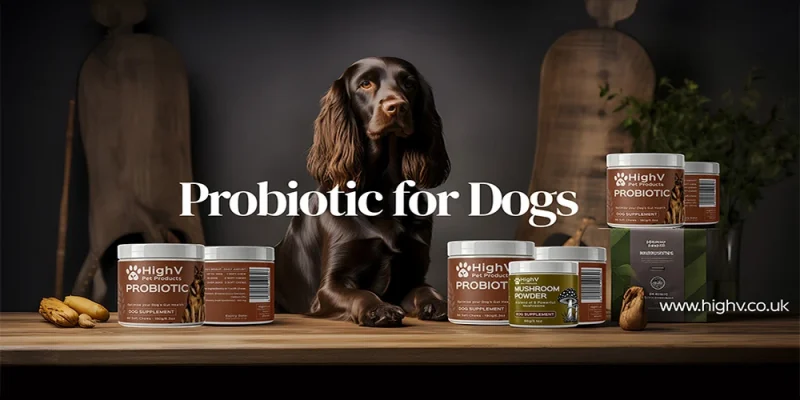
The ear infection cleared up beautifully. The problem started on about day three, when the stools went soft, and by day six you were taking him out at midnight.
Antibiotic-associated digestive upset is one of the most predictable things in veterinary medicine, and it catches owners out every time – partly because nobody warns them, and partly because it feels like the treatment has gone wrong when in fact it’s doing precisely what it was always going to do.
Why it happens
Antibiotics don’t aim. A broad-spectrum antibiotic prescribed for a skin infection, a dental abscess or a chest infection travels through the whole dog, and when it reaches the gut it kills a substantial proportion of the hundred trillion bacteria living there.
Those bacteria weren’t doing any harm. They were fermenting fibre, producing short-chain fatty acids that feed the cells lining the colon, synthesising vitamins, occupying space that would otherwise be available to something less pleasant, and keeping the immune system informed.
Remove a large fraction of that population and three things follow. Digestion becomes less efficient. The gut lining loses part of its fuel supply. And there’s suddenly room for opportunistic organisms – Clostridium perfringens being the usual culprit in dogs – to multiply in the space that’s opened up.
That’s the diarrhoea. Not a side effect in the incidental sense, but a direct and fairly inevitable consequence of what the drug does.
How long the damage lasts
Longer than the course.
Canine studies looking at microbiome composition after antibiotic treatment consistently find measurable disruption for weeks afterwards, and some bacterial groups take months to return to their previous levels. A few may not fully return at all. Metronidazole, one of the drugs most commonly reached for in gastrointestinal cases, is among the more disruptive.
The practical implication is that recovery is a project rather than a moment. The dog’s stools may firm up within days of finishing the course while the underlying population is still nowhere near where it started, which is why so many dogs have a second bout of loose stools a fortnight later for no apparent reason.
It’s also the strongest single argument for feeding Probiotics for Dogs across the whole period rather than just while the diarrhoea is happening – starting with the first tablet and carrying on for at least a month after the last one.
The timing question
The most common practical question, and it has a straightforward answer.
Give the probiotic during the course, not just afterwards. Waiting until the antibiotics finish means the gut spends the entire course undefended, and there’s decent evidence that concurrent use reduces the incidence and severity of antibiotic-associated diarrhoea.
Space the doses. Two hours between the antibiotic and the probiotic is the usual recommendation. Giving them together means the antibiotic kills a good proportion of the bacteria you’ve just paid for. If the antibiotic is twice daily with meals, the probiotic goes mid-morning and mid-afternoon.
Carry on afterwards. Four weeks minimum after the course finishes. This is the part people skip and it’s the part that matters for the population rather than the symptoms.
Finish the course
Worth saying plainly, because the temptation is real when the diarrhoea starts.
Do not stop an antibiotic course early, and do not adjust the dose, without speaking to your vet. Stopping early risks the original infection returning, often in a form that’s harder to treat second time.
If the digestive upset is bad enough that you’re considering it, that’s a phone call to the practice. They can advise, sometimes switch to a different antibiotic, sometimes add something to manage the diarrhoea. What they can’t do is help with a decision you made on Saturday and mentioned on Thursday.
What to expect, roughly
Loose stools typically appear somewhere between day two and day five. Frequency goes up. Some dogs get noticeably more wind. Appetite often dips, particularly with the antibiotics that cause nausea.
Most of this is uncomfortable rather than dangerous in an otherwise well adult dog, and it usually improves within a few days of the course ending.
What isn’t expected: blood in the stool, repeated vomiting, obvious lethargy, a dog who won’t eat at all for more than a day, or diarrhoea severe enough to cause dehydration. Any of those is a call to the vet rather than something to sit out.
Feeding through it and afterwards
Keep the diet consistent. This is not the moment to try a new food, because you’ll have no idea afterwards what caused what.
Small, frequent meals are easier on a disrupted gut than two large ones. If appetite is poor, warming the food slightly helps considerably – it raises the smell, and smell is most of what makes a dog want to eat.
Fibre matters here more than usual. The bacteria that survived need feeding, and fermentable fibre is what they eat. A spoonful of plain tinned pumpkin, psyllium husk, or a food containing beet pulp or chicory all provide it. This is the practical difference between letting the population recover on its own and actively helping it.
Give any tablets with food unless the label says otherwise, and follow the label rather than habit – some need an empty stomach.
What about yoghurt and kefir?
Reasonable question, and the honest answer is that they’re better than nothing and considerably weaker than people assume.
Live natural yoghurt does contain beneficial bacteria. The problems are dose and survival. The CFU count in a spoonful of supermarket yoghurt is a fraction of what a formulated supplement delivers, the strains are chosen for making yoghurt rather than for colonising a dog’s gut, and most won’t survive stomach acid in useful numbers.
Kefir is stronger – more strains, higher counts – and some owners swear by it.
Two practical cautions either way. Many adult dogs handle lactose poorly, so adding dairy to a dog who already has diarrhoea can make things worse rather than better. And nothing sweetened, flavoured or sugar-free should go anywhere near a dog, because xylitol is seriously toxic and turns up in low-sugar yoghurts.
If you want to use them, plain, unsweetened, and a small amount. As a supplement to a proper probiotic rather than instead of one.
Repeat courses and long-term antibiotics
Some dogs end up on antibiotics repeatedly – recurrent ear infections, chronic skin problems, dental disease, urinary infections. The gut effects are cumulative and these are the dogs most likely to develop persistently unreliable digestion.
Two things worth doing. First, ask why the infections keep recurring rather than treating each one as an isolated event, because recurrent infection usually has an underlying cause. Allergic skin disease and undiagnosed dental problems are the two big ones.
Second, treat gut support as a permanent part of the routine for these dogs rather than something you start and stop around each course.
Why your vet may be more cautious than you expect
If you’ve asked for antibiotics and been told they’re not appropriate, that isn’t a fob-off.
Veterinary practice has moved substantially on antibiotic use over the last decade. Most acute diarrhoea in dogs is not bacterial and doesn’t respond to antibiotics; giving them anyway disrupts the gut, prolongs recovery in some cases, and contributes to resistance that affects both animals and people.
Current guidance for uncomplicated acute diarrhoea in an otherwise well dog is generally supportive care rather than antibiotics. A vet declining to prescribe is usually following the evidence rather than being unhelpful.
The newer option
Faecal microbiota transplantation is now genuinely used in veterinary medicine rather than being a curiosity. Screened donor faeces, from a healthy dog, transferred by enema or capsule to restore a disrupted population.
The evidence base is still developing but it’s promising, particularly for dogs with chronic diarrhoea or severe dysbiosis that hasn’t responded to anything else. Not every practice offers it and referral centres are more likely to. Worth knowing it exists if you have a dog who’s been through several courses and never quite recovered.
Signs the gut has actually recovered
Symptoms resolve before the population does, so it’s worth knowing what a genuine recovery looks like rather than just the absence of diarrhoea.
Stools consistently firm across a fortnight, not just a good few days. Roughly the same number each day. Wind back to whatever was normal for him. Appetite steady rather than variable. Coat condition and energy back where they were.
The useful test is resilience: a properly recovered gut copes with a slightly unusual meal or a mildly stressful day without falling over. A dog who is fine as long as absolutely nothing changes has not finished recovering.
Give it a month after the course before you judge, and keep a note of what you’re seeing. Digestion improves slowly enough that memory is a poor guide, and a fortnight of notes will tell you far more than a general impression.
When to ring the vet
During or after a course, call if there’s blood in the stool, persistent vomiting, refusal to eat for more than about twenty-four hours, obvious lethargy, or signs of dehydration – tacky gums, or skin over the shoulders that’s slow to spring back when you lift it.
Call too if the diarrhoea is still going a fortnight after the course finished. That’s beyond the expected window and worth a faecal test rather than more waiting.
And if your dog has been through several courses over a year or two and his digestion has never really settled since, ask specifically about testing for dysbiosis. It’s a more useful conversation than another round of bland diet, and it occasionally turns up something that changes the whole picture.



Comments